Loading...
Serving San Carlos, CA and surrounding areas. (650) 530-1397
Hillside lots, clay soil, and HOA rules all affect how farm fencing gets installed on the Peninsula. We walk your property before we quote, handle permits, and build corners that stay tight through wet winters and dry summers.
Farm and ranch fencing in San Carlos means defining larger property boundaries, containing livestock, or protecting garden and pasture areas on hillside and rural-adjacent parcels. Most straightforward jobs on accessible terrain take one to two days for installation, with permit review adding time for properties inside city limits or in unincorporated San Mateo County.
While San Carlos is primarily residential, the hillside areas and larger parcels on the city's edges are actively used for hobby farming, horse keeping, and small livestock. Contractors serving this area often work across the broader Peninsula and South Bay. If your situation involves keeping animals near the pool area, our pet and dog fencing page covers containment options that work alongside a farm perimeter fence.
A phone quote for a hillside fencing job is almost never accurate. We do a site visit first - every time - because the terrain, soil type, and existing site conditions determine the real cost and the right materials.
When a fence starts to lean noticeably or the wire goes slack between posts, it usually means posts have shifted or corner bracing has failed. In San Carlos's hillside terrain, soil movement from seasonal rain and dry cycles can accelerate this kind of settling. A fence in this condition is no longer containing animals or reliably defining your property line.
Run your hand along the base of any wood post where it meets the soil. If the wood feels soft, crumbles, or shows dark discoloration, rot has set in. The Bay Area's wet winters make this a common problem, especially for posts that were not pressure-treated or were installed without proper drainage. Rotted posts cannot hold tension and will fail.
A gate that no longer works properly is one of the most common signs that a fence has reached the end of its useful life or was not installed correctly. Sagging gates usually mean the hinge post has shifted or the gate hardware has worn out. This is a safety issue if you have animals, children, or both.
Changes in how you use your land often require new fencing. If you are adding chickens, goats, horses, or a large vegetable garden to your San Carlos property, the right fence type depends on what you are protecting and what you are keeping out. The time to install it is before animals arrive, not after the first escape.
The right fencing material depends on what you are containing, the terrain of your property, and how long you need the fence to last without major maintenance. Woven wire and high-tensile wire are the workhorses for livestock containment on larger runs - both hold up well to animal pressure and last for years when the corner bracing is built correctly. For properties with goats, horses, or predator-exclusion needs, chain link fencing is another durable option that can be configured for small animal containment with the right mesh size.
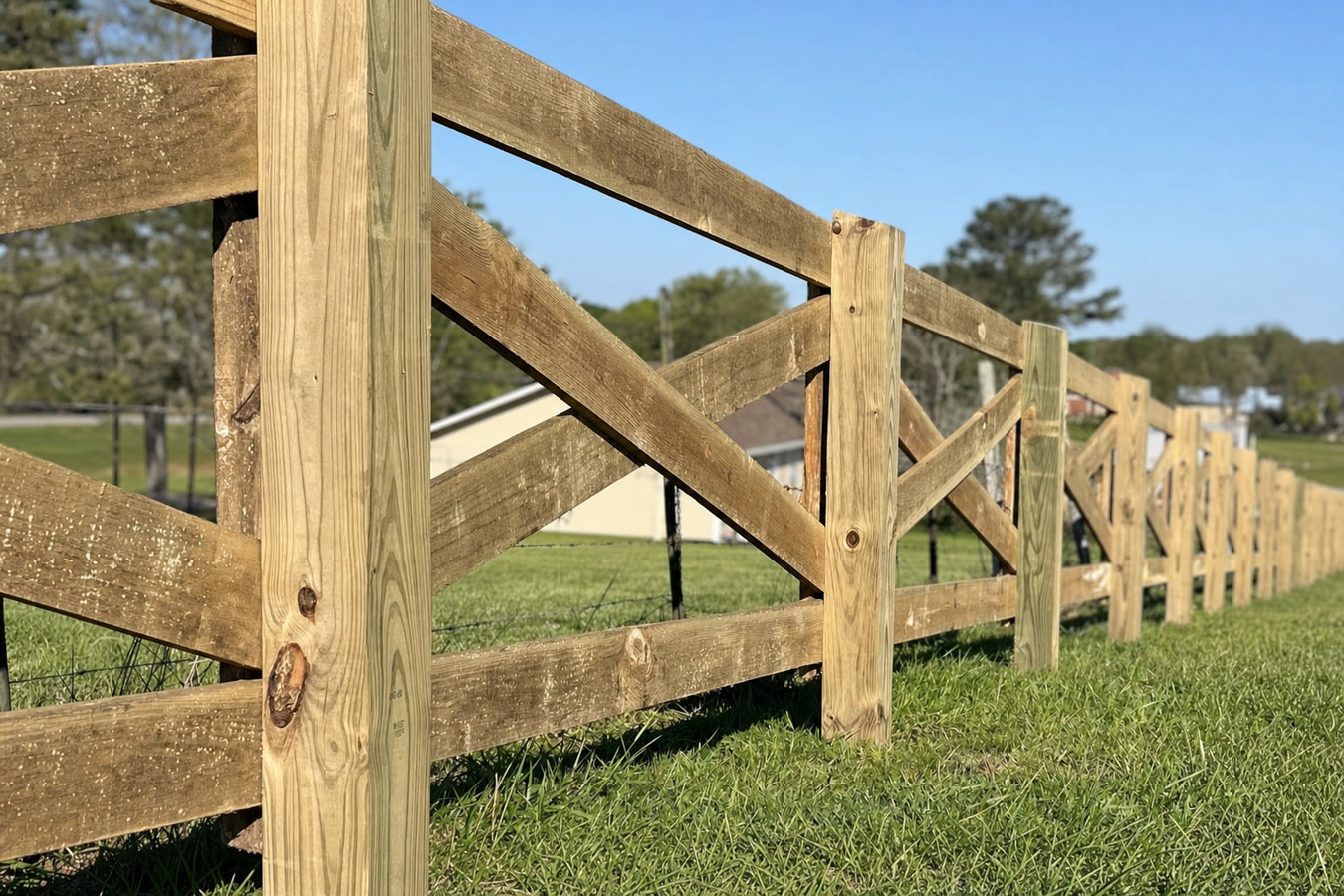
Wood post-and-rail fencing is a strong choice for horses and for homeowners who want a traditional farm look without wire. It is highly visible, which matters for animal safety, and it can be built to follow sloped terrain with stepped or raked panels. For properties where animals will be enclosed near the main yard, pet and dog fencing options offer a complementary approach to smaller containment areas. We always build corner and end brace assemblies to handle the long-term tension of any wire fence - the corners are what hold the whole system together.
Best for keeping small livestock like goats or sheep contained, especially on uneven terrain where gaps at the bottom need to be managed carefully.
Ideal for longer fence runs across large parcels where a strong, low-maintenance wire that holds tension over years is the priority.
The right choice for horse properties or homeowners who want a visible, traditional farm fence that follows sloped terrain without looking industrial.
Suited to chicken and small animal enclosures where the fence needs to keep raccoons, foxes, and other predators out - common in the San Carlos hills.
Much of San Carlos rises into the hills of the San Francisco Peninsula, where properties have steep grades, rocky outcroppings, and uneven terrain. Installing fence posts on a slope takes more time and skill than flat-ground work, and some rocky areas require specialized equipment to dig or drive posts. The Bay Area's Mediterranean climate - wet winters followed by long dry summers - puts real stress on fencing materials. Wood posts are vulnerable to rot at the ground line during the rainy season, and the seasonal soil expansion and contraction can shift posts over time if they are not set in the right type of footing. Choosing pressure-treated or naturally rot-resistant wood is a practical response to these local conditions.
We regularly install farm-style fencing on hillside parcels across the Peninsula, including larger properties in Redwood City and rural-adjacent land near Menlo Park. For science-backed guidance on livestock fencing suited to California's climate and terrain, the University of California Agriculture and Natural Resources publishes practical research on materials and installation methods. Permit requirements for parcels in unincorporated San Mateo County are handled by San Mateo County Planning.
We respond within one business day. For farm and ranch fencing, a site visit is essential before any price is given - terrain, soil type, and site access all affect the job. We schedule the visit and come out to walk your property in person.
We walk the fence line, assess the terrain, check for rocky soil or steep slopes, and ask about your goals - livestock containment, property boundary, predator exclusion. After the visit, you receive a written estimate that breaks out materials, labor, and any permit costs separately.
If your project requires a permit from the City of San Carlos or San Mateo County, we handle the application and keep you informed of the timeline. You should not need to manage the permit process yourself - we know both offices and how to file a complete application the first time.
We set corner and end posts first, then fill in line posts and attach wire or rails. Gates are hung last. Before the crew leaves, we walk the fence line with you to confirm posts are plumb, wire is evenly tensioned, and gates open and close smoothly.
We walk your property before we quote - every single time. No phone estimates for hillside jobs.
(650) 530-1397A phone quote for a hillside property is rarely accurate. We come to your land, walk the fence line, assess soil and slope conditions, and price the job based on what we actually see - so your final bill matches your estimate.
The corners and end brace assemblies are what keep a long fence from pulling inward and going slack over time. We build them to handle the tension load of your specific fence type, which is the difference between a fence that holds for years and one that needs re-tensioning every season.
Whether your property sits inside San Carlos city limits or in unincorporated San Mateo County, we know which office to call and how to file a complete permit application the first time. We also check HOA requirements before installation starts - violations are expensive to fix after the fact.
The wet winters and dry summers on the Peninsula are hard on fencing materials that were not chosen with this climate in mind. We recommend pressure-treated wood, rot-resistant species like redwood or cedar, or galvanized steel posts in wetter areas - materials that hold up to the local weather cycle rather than failing in a few seasons.
Farm fencing on hillside Peninsula terrain is a different job than flat-ground work, and we treat it that way. From the site visit to the final walkthrough, every step is built around what your property actually needs - not a standard template that ignores the slope and soil.
Smaller containment systems for dogs and backyard animals that complement a farm perimeter fence on the same property.
Learn MoreA durable wire option for livestock and predator-exclusion enclosures that can be configured for small animal containment with the right mesh.
Learn MoreSpring and early summer fill up fast on the Peninsula - call us now to lock in your installation date before the busy season hits.